ChartIQ
ChartIQ-React-Native-SDK
React Native SDK for the ChartIQ JavaScript library.
The ChartIQ React Native SDK supports a basic charting application. This SDK can be extended to support more elaborate implementations by adding code to invoke ChartIQ library functions directly or by creating a bridge file similar to nativeSdkBridge.js (in the mobile/js folder of your ChartIQ library).
Contact us at support@chartiq.com to request sample code and guidance on how to extend the SDK.
Requirements
A copy of the ChartIQ JavaScript library (works best with version 9.9.0).
- If you do not have a copy of the library or need a different version, please contact your account manager or visit our Request Follow-Up Site.
React Native 0.77.2
Android 8.1 Oreo (API level 27) or later
iOS 10.3 or later
Important: This SDK requires additional configuration to be able to work with the remote npm registry introduced in version 9.5.1.
App
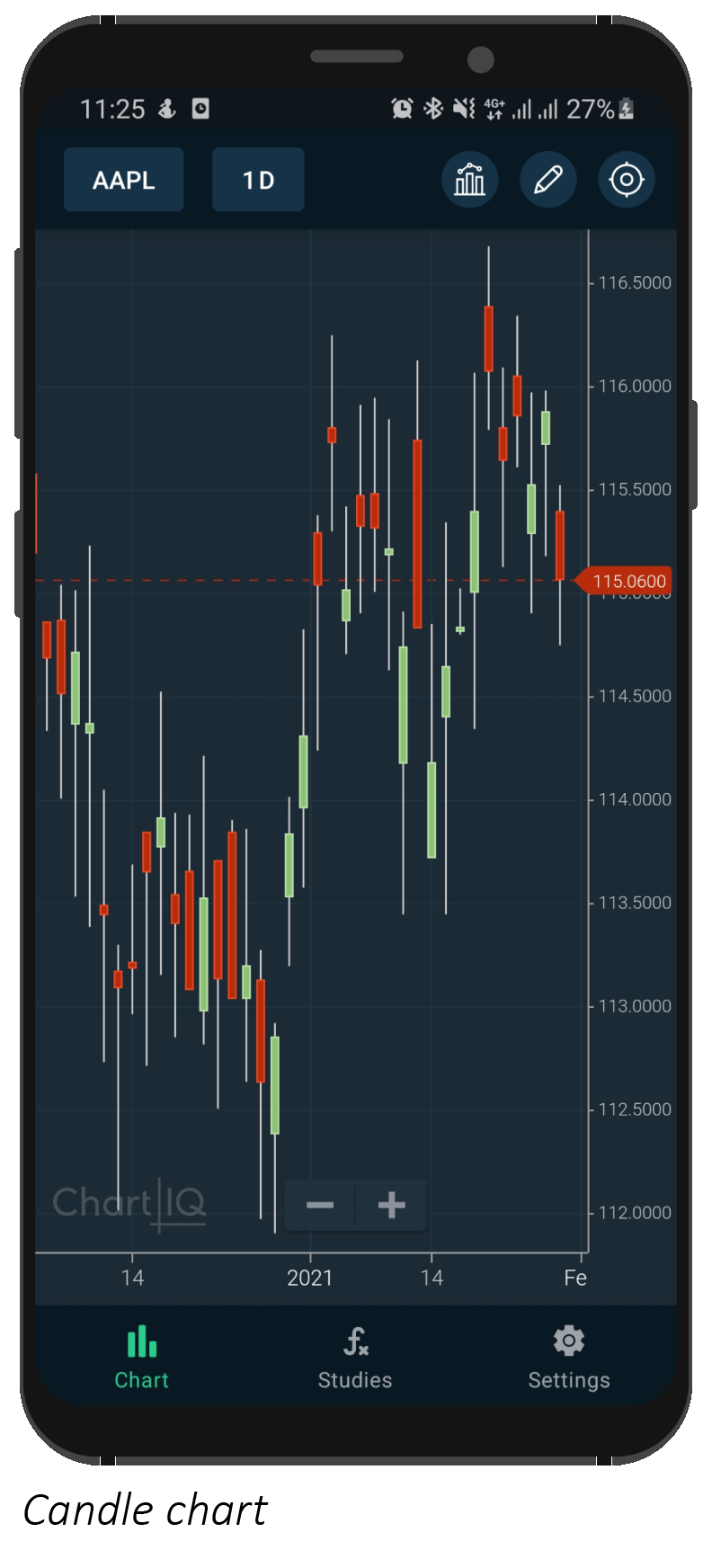
The example folder of this repository contains both Android and iOS app that was built using the SDK. Customize the apps to quickly create your own React Native charting application.
Known issues
- Macs with Apple silicon processors have issues building the example app with flipper enabled.
In order to fix this, you need either to update FlipperTransportTypes.h including the following line:
or to disable Flipper in the example app installing pods with the following command:#include <functional>NO_FLIPPER=1 pod install
App screen shots
 |
 |
 |
Run example app
While it's possible to use npm, the tooling is built around yarn, so you'll have an easier time if you use yarn for development.
To get started with the provided example project, run yarn in the root directory to install the required dependencies for each package:
yarn
To start the packager:
yarn example start
To run the example app on Android:
yarn example android
To run the example app on iOS:
yarn example ios
iOS installation additional steps
This project has been tested using Cocoapods 1.16.2.
If you are testing the iOS example app on a physical device you might have to install the ios-deploy package.
yarn global add ios-deploy
While developing you can run the example app to test your changes. Any changes you make in your library's JavaScript code will be reflected in the example app without a rebuild. If you change any native code, then you'll need to rebuild the example app.
Using ChartIQ React Native module
We offer a npm module that contains the project source SDK along with the necessary mobile bridge code for Android and iOS.
yarn add @chartiq/react-native-chartiq
or
npm i @chartiq/react-native-chartiq
Import the library into your project, provide a url to your deployed ChartIQ app in the ChartIQView component, and set the dataMethod to either "pull" or "push", depending on how you want to provide data to the chart.
import {ChartIQView} from '@chartiq/react-native-chartiq';

// ...

// sample styles for webview
const createStyles = () =>
  StyleSheet.create({
    box: {
      flex: 1,
    },
    chartIQ: {
      flex: 1,
    }
  });

const stylesTest = createStyles();

// ...

// Create the webview component
<View style={stylesTest.box}>
    <ChartIQView
        url="WEB_VIEW_SOURCE" // url to ChartIQ JS library
        dataMethod="pull"
        //onStart={initChart}
        //onPullInitialData={onPullInitialData}
        //onPullUpdateData={onPullUpdateData}
        //onPullPagingData={onPullPagingData}
        //onMeasureChanged={onMeasureChanged}
        style={stylesTest.chartIQ}
    />
 </View>
Now this will get you a blank chart when you launch your app as there is no data being passed in yet. As you see the data methods and onStart methods are commented out in the example above. Those will be further explored in our upcoming user guide, but in the meantime you can follow what we are doing in our own example app.
Android Note
When you install the ChartIQ sdk module you might have to set allowBackup in the AndroidManifest.xml file for your project, if it's not already set.
tools:replace="android:allowBackup"
android:allowBackup="false"
API documentation
The React Native sdk utilizes the existing mobile sdk that we have to offer.
Questions and support
Contact our development support team at support@chartiq.com.
Contributing
See the contributing guide to learn how to contribute to the repository and the development workflow.
License
Apache2
Made with create-react-native-library